Offside from a goal kick?
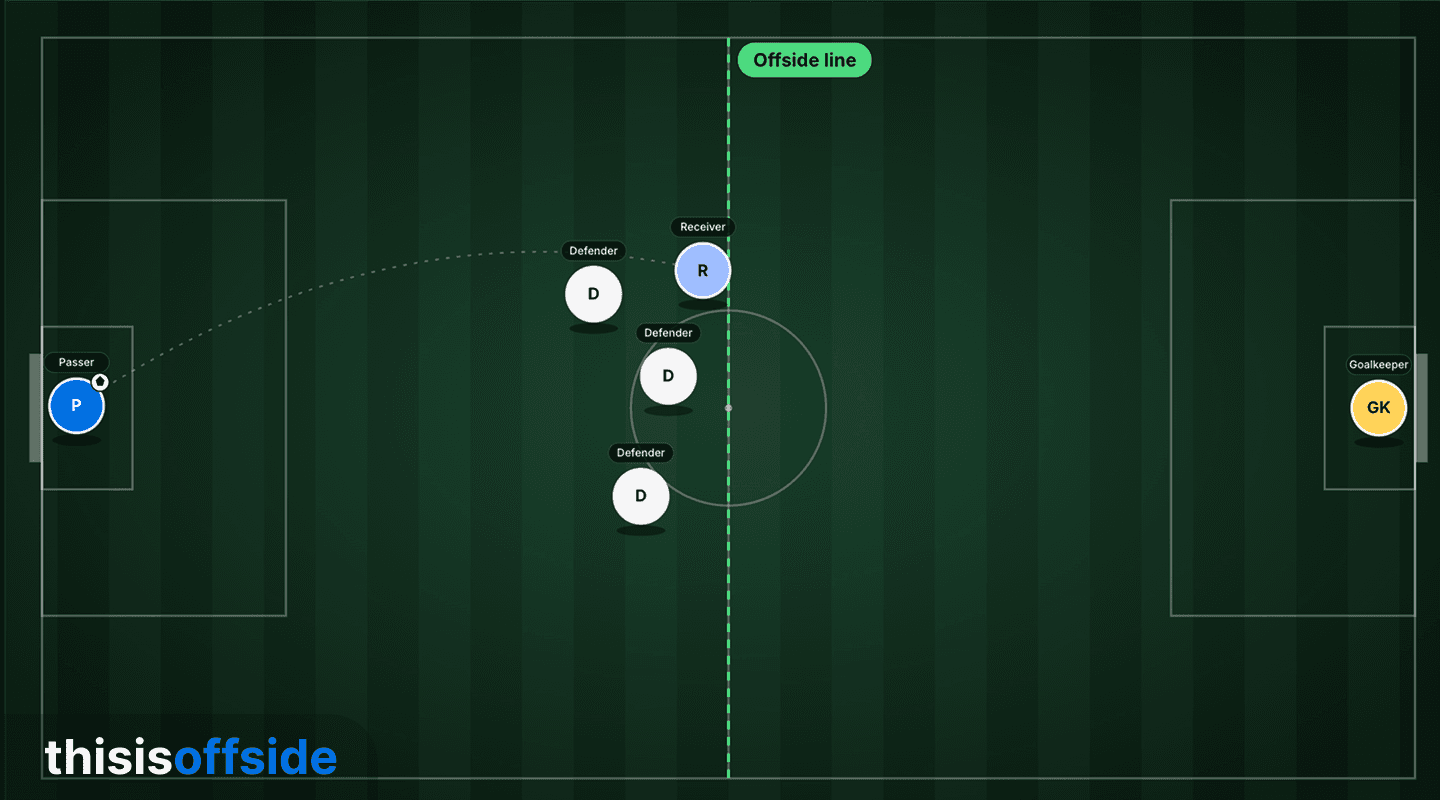
No. You cannot be offside from a goal kick.
It does not matter where you are standing on the pitch when a goal kick is taken.
You can be right in front of the goalkeeper, ahead of every single defender, and the offside rule does not apply.
This is one of the clearest exceptions in football and one that has actually changed relatively recently.
How the offside goal kick rule works
The offside rule is fully suspended for the entire duration of a goal kick, until the ball is properly in play.
This means any player on the attacking team can stand anywhere they like when the goal kick is taken. No flag, no foul, no matter the position.
This is the same logic that applies to corner kicks and throw-ins. Goal kicks are a restart, and restarts suspend offside entirely.
When this rule changed
This is worth knowing because many fans and even some players are still operating on the old rule.
Before 2019, you could be offside from a goal kick if you were in the opponent's half and ahead of the last defender when you received the ball directly from the kick.
In 2019, IFAB changed the rule. Since then, offside cannot be given directly from a goal kick, regardless of where any player is standing.
If you watch older matches, you may see situations being called offside that would be completely legal today.
A concrete example
Imagine this situation:
The opposing goalkeeper takes a goal kick
Your striker is standing ten metres ahead of the last defender, deep in the opponent's half
The goalkeeper plays a long ball directly to that striker
The striker controls it and scores
No offside. Completely legal under the current rule.
Before 2019 this would have been flagged. Today it is one of the most effective ways to exploit a high defensive line.
When does offside apply again after a goal kick?
The exemption only covers receiving the ball directly from the goal kick.
The moment any other player touches the ball after the kick, the normal offside rule returns.
So if the goal kick is headed on by a teammate, or the ball is played sideways to another player first, the usual rules apply from that touch onwards.
A common scenario:
The goalkeeper takes a short goal kick to a centre-back
The centre-back plays it forward to a striker who is ahead of the last defender
That is offside. The goal kick exemption ended the moment the centre-back touched the ball.
How offside goal kick rules compare to other restarts
Here is a simple overview of when the offside rule applies across different situations:
Goal kick. Offside suspended entirely until the ball is directly received.
Corner kick. Offside suspended entirely.
Throw-in. Offside suspended entirely.
Free kick. Offside applies normally once the ball is played.
Open play. Offside applies normally.
Goal kicks, corners, and throw-ins all suspend offside. Free kicks do not. That distinction is worth remembering.
Why this change made the game better
Before 2019, goalkeepers taking short goal kicks had to be careful about their own defenders being in offside positions.
It created unnecessary complications and slowed the game down. The rule change simplified things considerably.
Now teams can build out from the back more freely, and strikers pressing high up the pitch do not need to worry about their position when a goal kick is taken.
Test offside from goal kick yourself
Want to see exactly how the offside rule works and when it applies? Try our interactive offside simulator and drag players into different positions to see the rule in action.