What is passive offside in football?
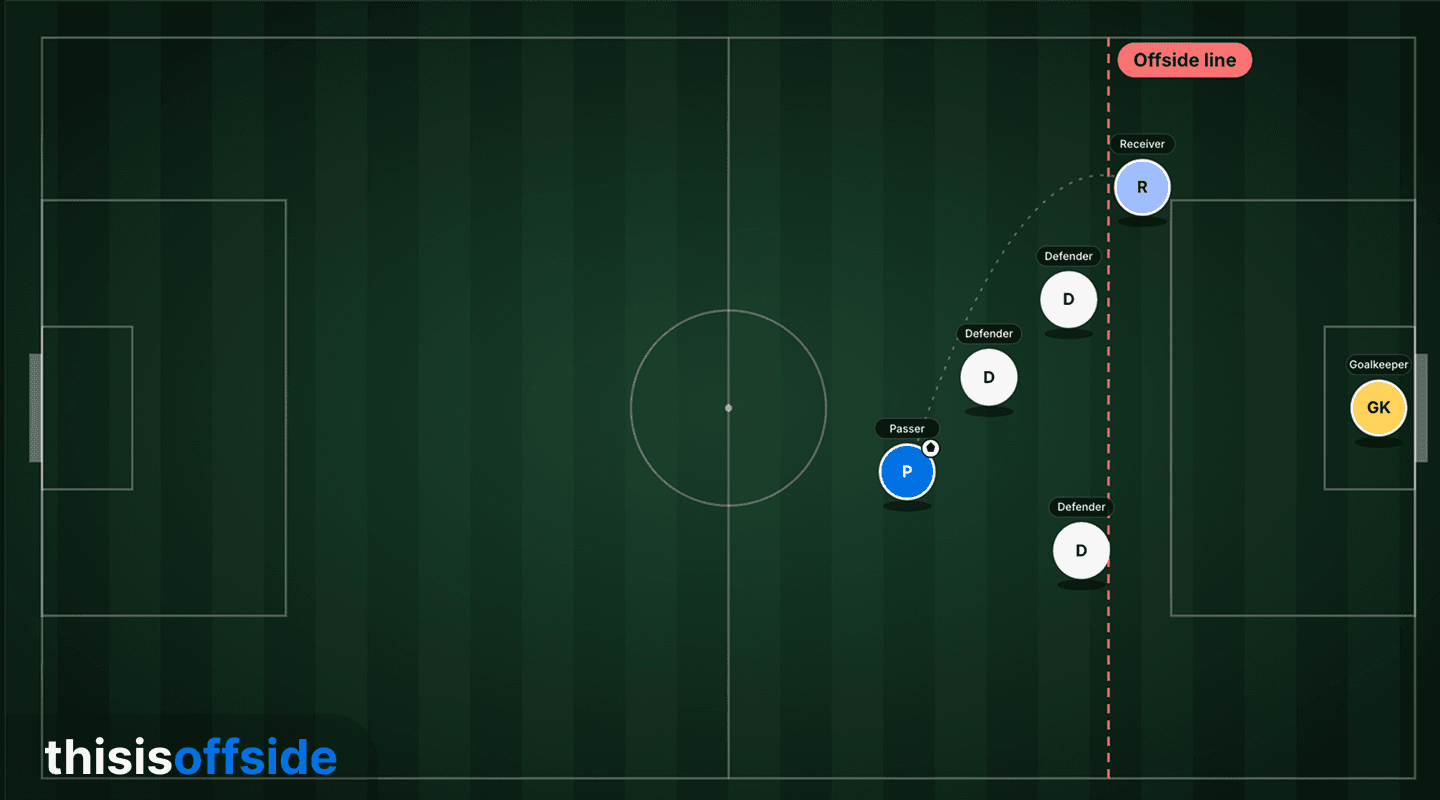
You are in an offside position, but you are not penalised. That is passive offside.
Being in an offside position is not an offence by itself. You only get penalised when you actively get involved in the play. If you stay out of it, the referee lets the game continue.
This is one of the most misunderstood parts of the offside rule.
The difference between a position and an offence in passive offside
These two things are not the same:
Being in an offside position
Committing an offside offence
You can stand in an offside position for as long as you want. No flag. No foul. Nothing happens.
The moment you touch the ball, interfere with a defender, or try to play a ball meant for you, that changes. Now you have committed an offside offence, and the flag goes up.
What counts as active involvement in passive offside?
The offside rule says you are penalised when you do one of these three things:
You play or touch a ball passed to you by a teammate while in an offside position
You block a defender's view or prevent them from reaching the ball
You gain an advantage from the ball coming back off the post, bar, or an opponent
If none of those apply, you are passive. Play continues.
A concrete example
Imagine this situation:
You are standing two metres ahead of the last defender, clearly offside
Your teammate receives the ball wide on the left and shoots
The shot hits the post and comes back
You tap in the rebound
That is an offside offence. Even though you were not involved in the original shot, you gained an advantage from being in that position. The flag goes up.
Now change the scenario:
You are standing in the same offside position
Your teammate receives the ball and passes it square to another player who is onside
That player shoots and scores
No flag. You were offside but passive. You did not touch the ball, block anyone, or benefit from your position.
Why the passive offside exists
Without this distinction, attackers could be penalised just for standing near the goal, even if they had no influence on the play.
The passive offside concept was introduced to make the rule fairer. It means that only players who actually affect the game are penalised, not those who happen to be in the wrong position.
It also makes the game flow better. Play does not stop every time an attacker wanders into an offside position.
Where it gets complicated
The hard part is that "interfering with an opponent" is sometimes a judgement call.
If you are standing in an offside position near a defender, are you blocking their view? Are you distracting them? Referees have to make that call in real time, which is why passive offside decisions are sometimes controversial.
VAR has made this slightly clearer, but it has not eliminated the grey areas entirely.
Test passive offside yourself
Want to see exactly where the offside line falls and when a player would be penalised? Try our interactive offside simulator and drag players into different positions to see the rule in action.